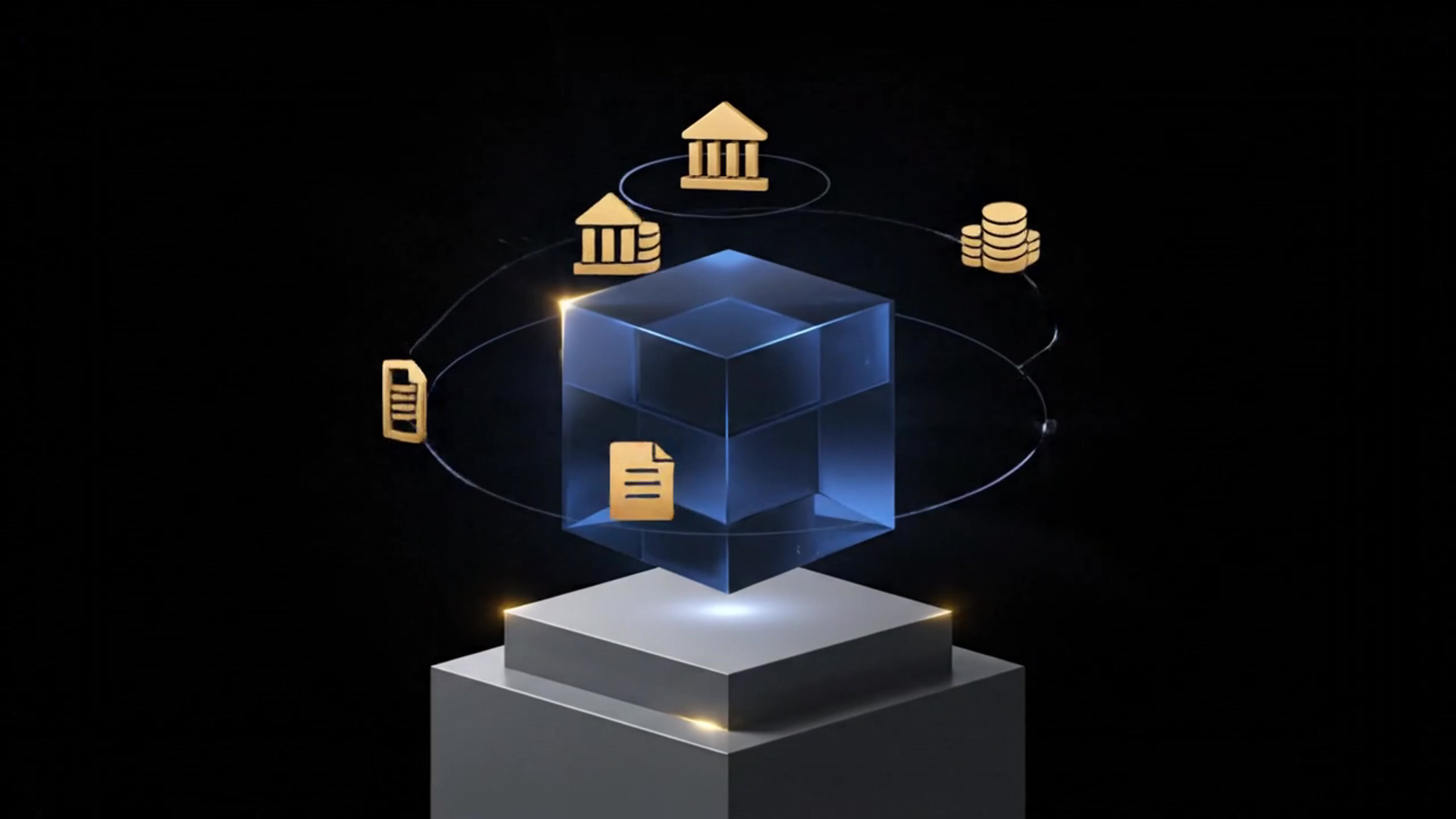

If you hold REVO or a name on Libertas (V1 network), you need to know three things. Nothing is required of you today. A freeze block will be announced. Nobody from Revolution will ever ask for your seed phrase.
The rest of this post explains why.
What happened
Libertas (V1 network) ran on the legacy zkSync Era stack, EraVM. It is running today.
Libertas (V1 network) had other limits. It never produced real validity proofs. It relied on code that is not in any repository. Its staking payouts ran inside block production.
The upstream stack has also moved on. The ZKsync documentation states that “ZKsync OS will replace EraVM for ZKsync chains” and that “EraVM and native EraVM account abstraction are not supported” in it. A patch would not fix this. A new genesis does.
What V2 is
Revolution V2 runs on ZKsync OS, which the documentation describes as “fully EVM equivalent.” Contracts compile with standard Ethereum tools. Every batch carries a real proof from the Airbender prover from public testnet onward. V2 is a rollup that publishes its data to Ethereum.
Virtus (V2 testnet) is the short-lived public testnet where V2 is tested before mainnet. It is not live yet. It launches in Phase 1.
Regenesis is not new
Other Layer 2 networks have restarted from a new genesis. Optimism completed its final regenesis on 11 November 2021, when it moved to EVM equivalence on mainnet. Its documentation notes that “older transactions are not part of the current blockchain”, while that history stayed accessible through separate tools.
The lesson is simple. State that matters can be carried forward. History can be preserved and published. The process has to be transparent.
The migration plan
The whitepaper (section 14) sets six steps.
- Freeze Libertas (V1 network) at a published block.
- Snapshot at that block. The tool exports REVO balances, staked positions, nodes, deployed contracts and token holders. The snapshot and its hash are published so anyone can check them.
- Airdrop balances on Virtus (V2 testnet), then on mainnet.
- Recreate stakes and pools on V2, subject to open decisions.
- Re-register names under
.revo. Earlier material used.rev. V2 standardizes on.revo. - Run V1 and V2 in parallel for a defined window, with user notices.
A preliminary snapshot at Libertas (V1 network) block 530,866 is in progress. It stays preliminary until the freeze. The final snapshot is rerun at the freeze block.
One fact to note. The V1 REVO token on Sepolia is a test token. Virtus (V2 testnet) creates a new test REVO. Balances are credited on the testnet first, then on mainnet.
Decided and open
Decided in the whitepaper:
- V2 starts from a new genesis on ZKsync OS.
- State carries over by a published, hashed snapshot.
- Names move to
.revo. - V2 is a rollup with data on Ethereum.
- The total emission and its curve are unchanged.
Still open (whitepaper 16.1 and 16.4):
| Item | Question |
|---|---|
| E1 Split rule | Libertas (V1 network) paid staking rewards under a technical draft rule. V2 implements the published rule. The change needs Association confirmation and a public notice. |
| E2 Emission start point | Resume by amount emitted, resume by calendar, or restart at era 1. |
| E3 Migration scope | Balances only, or also stakes, pools and names. To be decided before the freeze. |
T4 .rev and .revo | All public material updates to .revo. Names are reserved and redirected as needed. Holders of names under both are an open item. |
The proposed path for unclaimed fan rewards on Libertas (V1 network) is to snapshot them at the freeze block and credit them on V2. Migration scope is decided before the freeze. The proposed path for the split rule change includes a public notice.
The roadmap and its exit tests
Each phase ends with an exit test. A phase is done when its test passes. There are no dates here on purpose.
| Phase | Focus | Exit test |
|---|---|---|
| 0. Lock down | Rotate exposed secrets. Take control of infrastructure. | No working credential in any public repository. Revolution controls all infrastructure. |
| 1. Foundation and public testnet | Launch Virtus (V2 testnet) with a real prover, bridge portal, explorer and verifying nodes. | A batch commits, proves and executes on Sepolia. A deposit arrives and a withdrawal finalizes. A verifying node co-signs batches. A zero-balance account claims staking rewards for free. |
| 2. Identity | Nomen (name) on .revo, Sigillum (verified identity) facets, Agens (agent) identities. | A verified user creates agent identities with a passkey and no gas. Facet proofs verify on chain with published circuit audits. |
| 3. Payments | Settlement, escrow, Mandatum (delegated authority) anchoring, reputation. | Merchants accept USDC with facet requirements. End-to-end settlements run on testnet. |
| 4. Migration, audit, mainnet | Freeze Libertas (V1 network). Publish the final snapshot. Airdrop. Audit. Deploy mainnet. | Snapshot reconciles with Libertas (V1 network). Audit findings closed or accepted in writing. Launch checklist signed. |
| 5. Discovery and extension | First discovery category and further facets. | Funded intents filled in the first category. |
The freeze and final snapshot sit in Phase 4. Virtus (V2 testnet) runs before that.
What holders should do now
Nothing yet. You do not need to move tokens, sign transactions or register anything.
Watch for the freeze block announcement. It will come through Revolution’s official channels. It will name the block and, after the snapshot, publish the hash.
Protect yourself. Migrations attract scams. The pattern is predictable: a message says your tokens must be “migrated” or “claimed” and asks for your keys or a fee. The CFTC warns that it “would never ask for your private keys or seed phrases” and that you “should never pay an upfront fee for fraud recovery services.” The same rule applies here. Revolution will never ask for a seed phrase or private key. The migration is by airdrop. It does not require you to send anything. The FTC notes that “Cryptocurrency payments typically are not reversible” and lists ReportFraud.ftc.gov among the places to report fraud.
What builders should do now
Target standard Ethereum tooling. V2 uses solc, ERC-4337 accounts at the canonical EntryPoint v0.8 and ERC-7579 modules. EraVM-specific code and native account abstraction do not carry over. Plan to redeploy on Virtus (V2 testnet) when it opens.
What is next
Phase 1 brings Virtus (V2 testnet) online. The open migration decisions close before the freeze. The freeze block, the snapshot and its hash will be published through official Revolution channels. Until then, there is nothing to do.
Sources
- ZKsync documentation: ZKsync OS FAQ
- Optimism documentation: block explorers and regenesis history
- Infura: EVM Equivalence now live on Optimism (November 2021)
- CFTC: Beware Imposters Posing as CFTC Officials
- FTC: What To Know About Cryptocurrency and Scams
- Revolution Network Whitepaper V2, sections 2, 4, 10.2, 14, 15 and 16